Educators Built This for Educators
AI Math Collective is a collaboration focused on helping schools and districts make thoughtful decisions about AI in mathematics education. Our work brings together deep expertise in mathematics teaching, research, and responsible AI integration.
States where AI Math Collective has delivered professional development
Professional Development
We provide a six-part professional development series designed for high-quality engagement, personalization, and practical classroom application.
- A decision framework for when (and when not) to use AI in math
- A standards-aligned math task ready for AI-integrated use
- A reusable prompting or planning template
- Clear guardrails for responsible classroom implementation
- A practical next step to try right away
- Clear district messaging around AI in mathematics
- Alignment between instructional priorities and innovation
- Reduced tech overwhelm for staff
- Strategic, not reactive, AI adoption
Six Modules
Our six modules help teams build understanding, try practical strategies, and develop a more coherent approach to AI in mathematics. You can engage with the modules as individual sessions, in a mix-and-match package, in-person or online.
- •If you just want to get started, try Module 1 or 3.
- •If your teachers are already using AI and you're worried about rigor, try Modules 4 → 5 → 6
- •If your staff is split, some love AI and some are against it, try Modules 2 → 3 → 5
- •If you want to build district-wide coherence, try Modules 2 → 4 → 6
AI has been around since the 1950s (wait… really?), but suddenly it’s in your classroom. Why now? And what does that mean for your teaching when you’re already juggling so much?
You'll explore:
- What's under the hood? How does AI work? How does it do math?
- When AI supports or undermines learning
- Adapting a familiar classroom activity while maintaining student rigor
In this interactive session, you will explore how AI can support your expertise and deepen student reasoning. We will learn what’s under the hood, build key vocabulary, see bias and limitations in action, and re-examine a familiar classroom task through an AI lens. Participants leave with clearer norms, stronger judgment about when AI helps or harms learning, and one practical next step to try right away.
AI can save time, surface ideas, and support planning, but it also brings real risks. It can also mean students sharing private information with chatbots or relying on companion bots in ways that affect their well-being. Rather than treating ethics as a side conversation, you’ll look at how these issues show up in everyday instructional decisions.
You'll explore:
- Responsible AI use in mathematics classrooms
- Bias, privacy, hallucinations, transparency, and overreliance
- Norms and practical guardrails for AI integration
Leave with clearer norms, stronger judgment, and practical guardrails for using AI in ways that protect students, teacher expertise, and meaningful mathematical learning.
A weak prompt gets you generic AI. A strong prompt gets you something you can actually use. This session focuses on how to write better prompts for real math teaching tasks without handing over the professional thinking.
You'll explore:
- Research based prompting strategies
- Critiquing AI output quality
- Positioning AI as a critical-partner
Learn how to prompt AI more effectively for real math classroom tasks such as planning, differentiating instruction, and revising tasks. We will explore how strong math-specific inputs shape the quality of AI outputs, including how giving AI access to the right research, curricular materials, and instructional frameworks can lead to much better results. You’ll develop practical prompting moves, higher-quality AI outcomes, and better judgment about how to use AI without handing over the thinking.
Picture this: your students are tackling high-cognitive-demand tasks and using AI not just as an answer-getter, but as a thought partner.
You'll explore:
- Extending students’ mathematical thinking
- Strengthening the Standards for Mathematical Practice
- Comparing AI math tools for classroom use
Explore how AI tools can support students as sensemakers, reasoners, modelers, and problem-solvers. We will examine how purposeful AI use can strengthen the Standards for Mathematical Practice, especially when students use tools to explain, compare, justify, and revise their thinking. Through hands-on task exploration, participants will try different AI math tools, reflect on the capabilities and limitations of each, and consider what strategic use looks like in real classrooms.
When students hit a dead end in math, do they pause, try, revise, and reason… or do they open a chatbot and skip the very part that builds understanding? This session focuses on how to preserve productive struggle when quick answers are always available.
You'll explore:
- Maintaining high cognitive demand of math tasks in the age of AI
- Centering students as thinkers and doers of mathematics
- Supporting students to struggle rather than turn to AI
Explore how teacher scaffolding can keep struggle productive in a classroom where a quick answer is one prompt away. We will reflect on practical strategies on how AI can be used to extend thinking, nudge perseverance, and support students in making sense of complex ideas. Participants examine how offering hints, asking questions, using high and low cognitive demand tasks, or explaining steps can either sustain or diminish productive struggle.
AI changes a core assumption behind assessment: if a student can produce a correct answer, polished explanation, or clean proof, we often assume they understand the math. But when tools can generate the product, what still counts as evidence of learning?
You'll explore:
- Making student mathematical thinking visible
- Testing a math assessment against AI capabilities
- Designing assessments beyond answer-getting
Rethink rigor and assessment in AI-rich classrooms, with a focus on making student thinking visible. We will explore practical ways to gather stronger evidence of understanding through reasoning, revision, comparison, and justification, rather than correctness alone. Participants take away clearer language for what counts as evidence and concrete strategies for assessing math in ways that protect and reveal student thinking.
Interested in learning more?
If you would like more information about the AI Math Collective, the six-part professional development series, and pricing information please reach out.
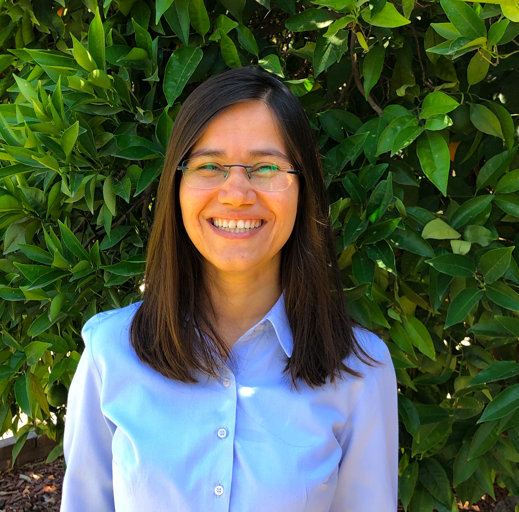
Dr. Yilmaz is a mathematics teacher educator with over 15 years of experience in mathematics teaching, teacher education, and AI-specialized educational consulting. She partners with schools, universities, and educational organizations to support the productive integration of AI into mathematics teaching and learning. Dr. Yilmaz has designed and facilitated numerous professional learning sessions on AI in mathematics education at conferences and organizations, including AMTE, NCTM, PME-NA, and Math for America.
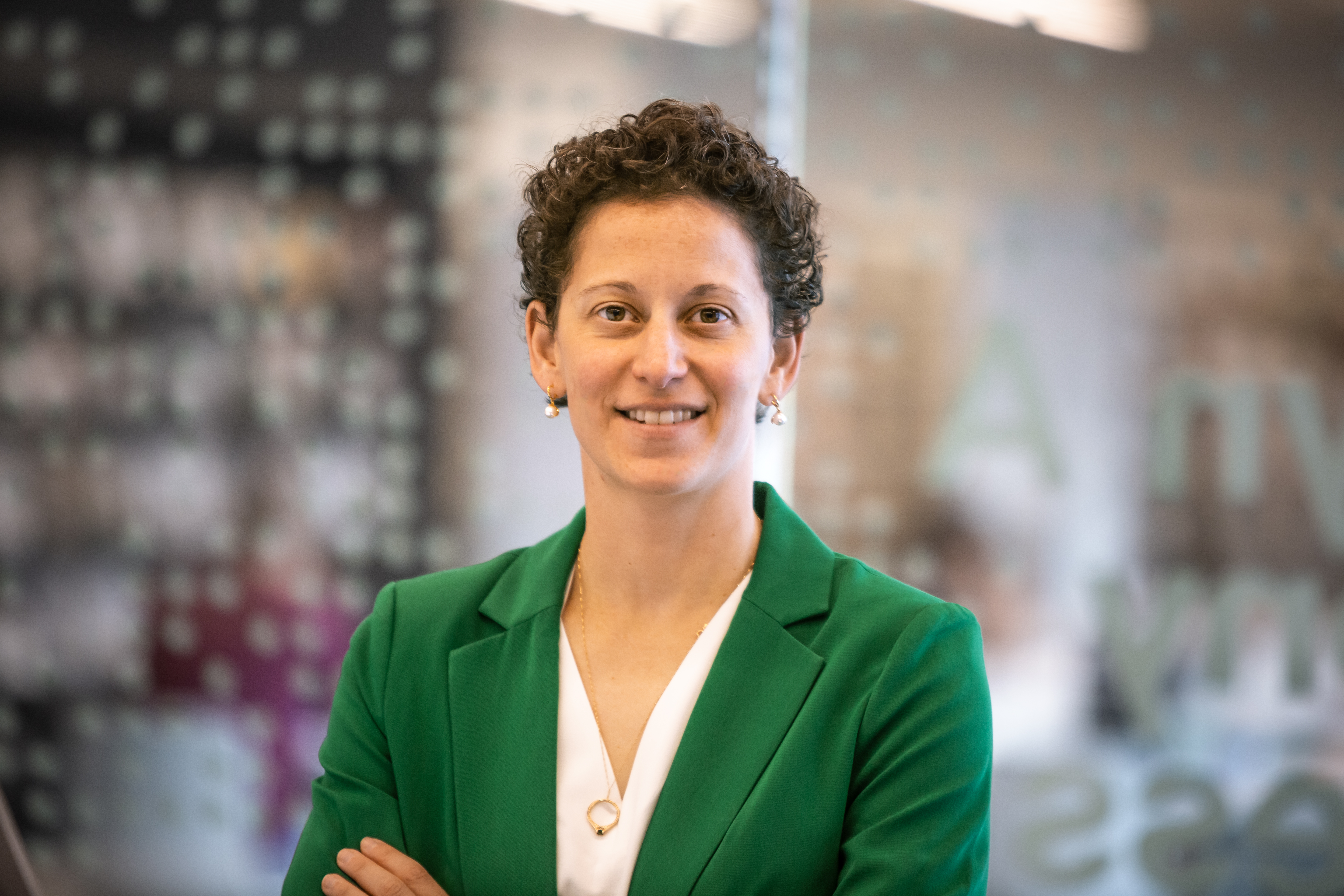
Karen Levin is the founder of Math for Humans, a professional learning initiative that helps educators integrate AI to deepen student reasoning rather than replace it. With 15+ years as a classroom teacher, instructional coach, and leading math initiatives across 20+ Boston schools, she specializes in cutting through technology hype to deliver practical strategies that support great teaching.